Understanding Thrust Needle Roller and Cage Assemblies in Real Applications
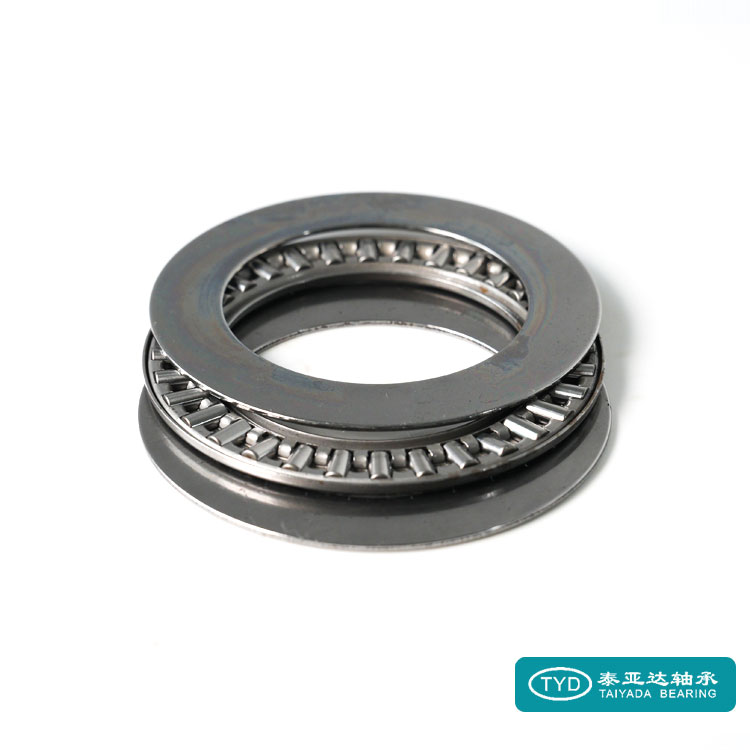
When engineers search for a Thrust needle roller and cage assembly China manufacturer, they are usually dealing with tight axial spaces, fluctuating loads, and demanding service life targets. In such environments, thrust needle roller and cage assemblies, combined with metric center washers like the ZS series, form compact axial bearing solutions that fit into constrained housing designs while still supporting significant thrust forces. Their geometry and material selection directly influence fatigue life, friction, and operating temperature.
Changzhou Taiyada bearing Co.,Ltd, also known as Taiyada bearing, has focused for over two decades on axial and radial needle technologies, including thrust needle bearing components such as washers and cage assemblies. Located in Niutang Town, Changzhou City, Jiangsu Province, this plant integrates water pump bearings, needle roller bearings, and track roller bearings with matching machining services to support automotive engines, agricultural machinery, and heavy-duty equipment. This accumulated field data is crucial when optimizing thrust needle roller and cage assembly structures.
In practice, thrust needle roller and cage assemblies are rarely used in isolation. They work together with axial bearing washers ZS series, which act as raceways and alignment surfaces. These ZS metric center washers can be housing-guided or shaft-guided and are suitable for double-direction axial combinations with AXK and K811 series assemblies. A technically competent Metric thrust needle bearing components factory China will ensure the correct washer type and geometry are chosen to balance axial clearance, rigidity, and thermal expansion.
Role of ZS Series Axial Bearing Washers in System Design
The ZS series axial bearing washers are designed as metric center washers for thrust bearings, enabling engineers to configure single or double-direction axial bearing sets. They are suitable for AXK and K811 thrust needle roller and cage assemblies and can be guided either by the housing or by the shaft. This flexibility allows designers to tune the contact pattern on the rollers and to control how axial loads are transmitted into the surrounding structure.
For a Thrust needle roller and cage assembly China manufacturer, accurate washer flatness, parallelism, and surface roughness are critical. Taiyada bearing utilizes Rockwell hardness testers and universal length measuring instruments to validate ZS washer hardness and dimensional stability. This ensures that the washers provide a consistent raceway, minimizing edge stresses and reducing the risk of premature spalling under boundary lubrication conditions.
By integrating the ZS series with needle roller cages, Taiyada bearing helps customers build modular axial bearing systems that can be assembled, disassembled, and inspected without fully redesigning the housing or shaft. This modularity is particularly helpful when customers upgrade belt tension on water pumps or change the loading profile on transmission systems and need to reassess their thrust components without scrapping existing hardware.
Typical Pain Points in Thrust Needle Bearing Components and Root Causes
Across automotive, agricultural, and heavy industrial machinery, engineers face recurring issues with axial bearing systems: installation misalignment, premature fatigue, excessive axial noise, and occasional seizure. These pain points are especially pronounced when thrust needle roller and cage assemblies are integrated with improperly machined housings or shafts. A specialist Metric thrust needle bearing components factory China can often trace these failures back to geometrical fit, dynamic load rating, and lubrication strategy rather than isolated component defects.
One frequent problem is installation difficulty and misalignment. If housing bores, shaft shoulders, or alignment faces for ZS axial bearing washers deviate from ISO or GB/T fit tolerances, the assembled thrust needle roller and cage assembly may suffer uneven load distribution. Cylindricity errors and non-perpendicular mating surfaces can tilt the washers, forcing the rollers to run with localized stress peaks. Taiyada bearing’s QC inspectors routinely check coaxiality and perpendicularity of both washers and mating parts to reduce such risks.
Another pain point is premature fatigue spalling and low durability. This often occurs when actual axial loads exceed the basic dynamic load rating (C-value) of the thrust assembly. If the cage, roller count, and washer thickness are not matched to the belt tension or hydraulic thrust, micro-pitting develops, followed by spalling in a fraction of the intended service life. As an experienced Thrust needle roller and cage assembly China manufacturer, Taiyada bearing emphasizes C-value calculations and surface roughness control (Ra), ensuring the raceway finish and roller geometry support the real-world axial loads.
Noise, Vibration, and Seizure in Axial Systems
Excessive rotational noise and chattering in thrust needle bearing systems usually point to four combined factors: sub-par washer raceway finish, inferior grease, mismatch between roller geometry and groove curvature, and excessive axial clearance. When the internal clearance is too large, rollers can wobble and generate high-frequency vibration. Taiyada bearing addresses these issues by standardizing washer grinding processes, selecting grease with adequate film strength, and tuning the curvature ratio between rollers and washers.
Assembly seizure or locking, particularly in axial loaded water pump or transmission applications, is often linked to zero or negative operational clearance. Tight interference fits on adjacent components, combined with thermal expansion, can compress the thrust assembly beyond design limits. Misaligned washer surfaces increase friction and drive rapid temperature rise. Taiyada bearing mitigates this through fit tolerance recommendations and by offering machining services that bring housing and shaft dimensions back into specification.
For customers, the value lies not just in the components themselves, but in the analysis behind them. As a Metric thrust needle bearing components factory China, Taiyada bearing documents failure modes and correlates them with installation photos, load histories, and lubrication logs. This enables more accurate root cause identification and helps prevent repeat failures, particularly in fleets of agricultural machinery or textile lines where downtime directly affects seasonal output or daily production rates.
Case Study: Optimizing Water Pump Bearings and Thrust Components
One automotive engine customer approached Taiyada bearing with customized water pump bearing drawings that also required stable axial support due to increased belt tension. The initial design suffered structural collapse: cage fracture, rolling element dislodgement, and rapid performance loss during testing. Investigation revealed that the basic dynamic load rating (C-value) was insufficient and that internal geometry—ball count, diameter, and raceway curvature—did not match the actual belt force.
Reverse engineering of the benchmark bearing and the associated thrust components revealed that the washers and internal clearance configuration were under-dimensioned for the new tensioner profile. Taiyada bearing’s R&D engineers recalculated the C-value, increased rolling element count, and adjusted raceway curvature. In parallel, the axial support configuration was re-evaluated to ensure the thrust surfaces minimized bending and edge loading in the water pump assembly.
After redesign, field data showed a 30% reduction in bearing-related maintenance costs and a 25% increase in water pump service life compared to the previous iteration. The customer’s production manager reported that warranty claims on the cooling system had dropped significantly over two consecutive model years. Without changing the overall housing or shaft envelope, the optimized water pump bearing and axial support allowed the OEM to retain its existing assembly line tooling while improving durability and stability.
Feedback from an Automotive Production Manager
A production manager from a mid-sized automotive engine manufacturer described the impact of these changes on their operations. Before collaborating with this Thrust needle roller and cage assembly China manufacturer, they faced frequent test bench failures and inconsistent axial play in prototype water pumps. After adopting Taiyada bearing’s optimized design and washer configuration, end-of-line noise measurements stabilized, and failure rates during durability testing decreased noticeably.
The manager highlighted that the consistent geometry of the thrust components simplified assembly processes. Torque-to-turn values became more predictable, making it easier to set acceptance criteria at the plant. The refined washer and cage design contributed to smoother belt drive operation, which in turn reduced micro-vibration transmitted to adjacent components, such as idler pulleys and alternators.
For the OEM, these improvements did not merely translate into numerical gains; they enabled more confident long-term platform planning. With stable axial bearing behavior, engineering teams could focus on new features rather than repeatedly troubleshooting cooling system durability. Taiyada bearing’s failure analysis approach proved more valuable than simply supplying individual parts, aligning well with the OEM’s long-term quality strategy.
Quality Framework and Manufacturing Capabilities Behind Thrust Components
Behind each thrust needle roller and cage assembly lies a combination of material control, heat treatment, grinding precision, and systematic inspection. Taiyada bearing operates under dual certifications—ISO 9001 and IATF 16949—forming a closed-loop quality framework that spans raw material procurement, process control, and final inspection. For axial bearing washers and needle roller cages, these standards help sustain batch-to-batch consistency across millions of units.
With over 50 grinding machines, 3 heat treatment lines, and 50 supporting production machines, Taiyada bearing scales its output beyond 3 million bearing sets annually. Around 40% of this volume is exported to Europe, North America, the Middle East, and Southeast Asia. As a Metric thrust needle bearing components factory China, the company leverages its independent import and export rights to serve direct overseas markets that demand traceability, consistent hardness profiles, and reliable dimensional uniformity.
Inspection hardware includes approximately 100 sets of high-precision testing equipment, from Rockwell hardness testers to universal length measuring instruments. These tools play a crucial role in validating the flatness and surface roughness of axial bearing washers, ensuring they can function as raceways for thrust needle roller and cage assemblies without causing metal-to-metal contact under boundary lubrication conditions. The goal is to stabilize operating clearances and contact patterns across the entire service life.
Alignment with Automotive-Grade Requirements
Thrust needle bearing components for engines and transmissions must align with automotive-grade expectations, particularly when used in water pump bearings or transmission subassemblies. IATF 16949 certification confirms that Taiyada bearing’s management practices, defect prevention routines, and documentation systems are compatible with OEM and Tier 1 supplier requirements. This includes process FMEAs, control plans, and traceability protocols for axial washers and cages.
The company’s 20-year manufacturing heritage, along with early endorsements from regional quality supervision institutes, demonstrates that the quality system has matured through continuous production rather than short-term batch projects. For global users seeking a Thrust needle roller and cage assembly China manufacturer, this long-term track record provides confidence in both product stability and process repeatability.
By combining automotive-grade controls with flexible machining services, Taiyada bearing can adapt thrust component designs to various sectors. Axial bearing washers ZS series, needle roller cages, and related hardware are configured to meet the needs of automotive engines, agricultural machinery, textile systems, and heavy-duty mechanical equipment. This cross-industry experience broadens the data set used to refine tolerances, surface finishes, and lubrication recommendations.
Conclusion: Why Engineers Rely on Taiyada Bearing for Thrust Components
Engineers looking for a seasoned Thrust needle roller and cage assembly China manufacturer often prioritize three elements: consistent geometry, credible load calculations, and practical failure analysis support. Taiyada bearing combines these with robust production capacity, certified quality frameworks, and a track record of solving real axial bearing issues in automotive, agricultural, textile, and heavy industrial applications.
From metric center washers like the ZS series to complete thrust needle roller and cage assemblies, the company’s approach emphasizes fit tolerance control, raceway finish quality, and correctly matched C-values. This combination helps reduce premature fatigue, noise, seizure, and assembly variability. The documented improvements—such as cost reductions of about 30% and service life gains around 25% in specific case studies—stem from careful engineering rather than isolated component changes.
For design teams and maintenance engineers, this means that collaboration with a capable Metric thrust needle bearing components factory China can lead to more predictable axial bearing behavior and lower total lifecycle costs. Taiyada bearing’s experience-based recommendations on fits, lubrication, and geometry tuning allow axial systems to operate within stable limits, even under changing loads and speeds.
In practice, the key advantage lies in the combination of technical depth and manufacturing discipline. Taiyada bearing not only produces thrust needle roller and cage assemblies and ZS axial bearing washers, but also integrates them into broader mechanical systems with attention to real-world constraints. For readers evaluating axial bearing solutions, these capabilities provide a foundation for durable, efficient designs that remain stable across varied operating conditions.
