Understanding Heavy Vehicle Hydrostatic Drive Bearings and Efficiency Challenges
When engineers search for a China supplier for heavy vehicle hydrostatic drive bearings, the focus is no longer just on basic load capacity. Hydrostatic drive systems in construction machinery, agricultural equipment, and heavy-duty industrial vehicles must convert hydraulic energy into mechanical motion with minimal energy loss and controllable heat generation. Bearings inside pumps, motors, and gear interfaces directly influence volumetric efficiency, noise level, and long-term reliability.
In a hydrostatic drive, the combination of hydraulic pressure, misalignment, and shock loads often leads to complex stress patterns on the bearing raceways. If the bearing structure is not optimized—whether it is an integral shaft water pump bearing, a needle roller bearing supporting a compact pump, or a track roller guiding a heavy carriage—the system may suffer from premature fatigue spalling, increased leakage, and unstable torque. For heavy vehicles working under continuous high-load cycles, such failures translate directly into unplanned downtime and high maintenance cost.
Changzhou Taiyada bearing Co.,Ltd (abbreviated as Taiyada bearing) has positioned its product portfolio around these real operating conditions. With experience in automotive water pump bearings, needle roller bearings, and track roller bearings, the company’s engineering team focuses on radial rigidity, surface finish, and internal clearance control. These aspects may look minor individually, yet together they strongly affect the overall efficiency of hydrostatic drives and related hydraulic subsystems in heavy vehicles.
How Taiyada Bearing’s Product Lines Support Hydrostatic and Hydraulic System Efficiency
Although Taiyada bearing is widely known for automotive water pump bearings and needle roller bearings, the underlying design logic is highly relevant to heavy vehicle hydrostatic drive bearings. A typical hydrostatic drive uses axial piston pumps/motors, support bearings on shaft ends, and track rollers or cam followers for actuation and guidance. These components all benefit from compact structure, precise geometry, and stable lubrication behavior.
For shaft support in compact pumps and motors, the company’s needle roller bearings (NA, RNA, NK, NKI, IR, NATR, NUTR, KR, NKIA, NKIB, NKX, NKXR series) use slender rollers to maximize radial capacity within minimal radial thickness. This directly supports high operating pressures and helps reduce housing size, which is essential for dense hydraulic manifolds on heavy vehicles. When the quenched and ground shaft journal acts as a raceway, the structure becomes even more space-saving, leaving more volume for oil channels and reinforcing ribs.
In auxiliary systems such as hydraulic cooling pumps or combined water-oil pumps used with hydrostatic drives, automotive water pump bearings designed and manufactured by Taiyada bearing offer integral shaft double-row structures. By eliminating the inner ring and letting rolling elements run directly on the shaft, the bearing achieves high rigidity and reduced radial dimensions. This type of design is compatible with high belt tension and significant speed variation, which are common in heavy vehicles that frequently change load conditions on construction sites or in agricultural fields.
From Automotive Cooling to Heavy Vehicle Hydraulics
The same bearing families that support automotive engine cooling at 3,000–6,000 rpm have been adapted to higher precision scenarios such as DTY textile machinery at 15,000–25,000 rpm with ceramic balls and aerospace grease. This experience in high-speed, high-stability applications gives the engineering team a strong foundation for optimizing bearings used in demanding hydraulic systems. When selecting a Custom size vehicle hydraulic system bearings factory, this kind of cross-industry application record is particularly valuable.
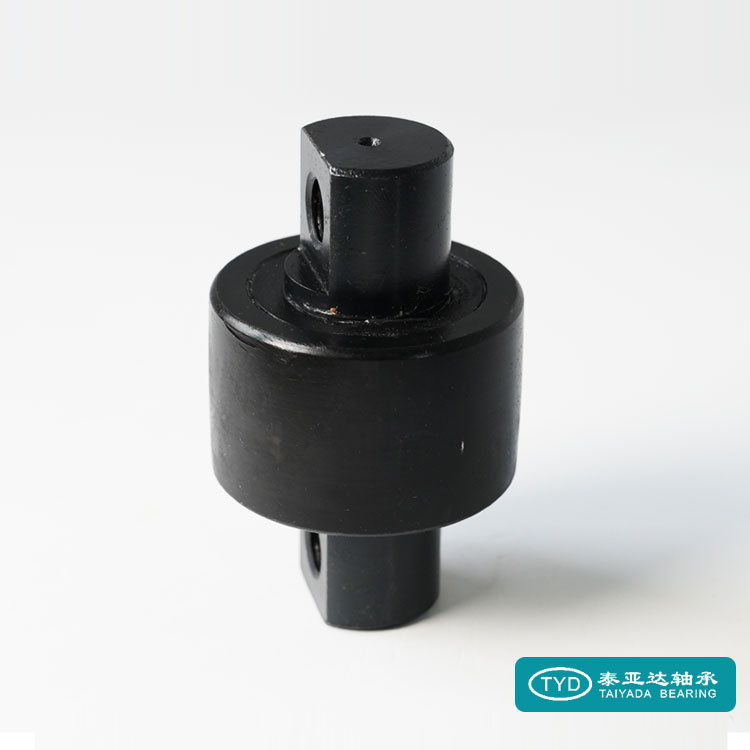
Track roller bearings and cam followers produced by the company—with thick-walled outer rings and crowned or cylindrical profiles—are structurally suited to act as guide elements in heavy-duty hydrostatic-driven vehicles. These rollers can handle shock loads from uneven terrain, while the crowned profile compensates for misalignment between chassis and guide rails. As a result, the supporting structure for hydrostatic drive components remains stable and less prone to deformation.
Typical Failure Modes in Hydrostatic and Hydraulic Bearings—and How to Avoid Them
Users of hydrostatic drive systems often report similar pain points: unexpected bearing seizure shortly after installation, excessive rotational noise during high pressure operation, or sudden structural collapse under peak load. These problems are rarely caused by a single factor; they are typically linked to a combination of fit tolerance, internal clearance, lubricant selection, and basic dynamic load rating (C-value).
One of the most common issues is installation difficulty and misalignment. In heavy vehicle hydraulic pumps and motors, housing deformation under tightening forces can push bearings out of their designed geometry. If cylindricity or coaxiality of the housing bore is out of tolerance, the internal raceway deformation can lead to localized high stress areas. Over time, this manifests as fatigue spalling and non-uniform wear, causing energy loss and reduced hydrostatic drive efficiency.
A second recurring problem is premature fatigue spalling, usually rooted in a mismatch between actual operational loads and the C-value of the chosen bearing type. When heavy vehicles operate with high and fluctuating hydraulic pressures, design loads may be underestimated. If the bearing internal structure—ball count, rolling element diameter, and raceway curvature—is not tailored to these conditions, fatigue will accumulate quickly. This is particularly critical in compact needle roller bearings where contact stress is concentrated.
Noise, Vibration, and Efficiency Loss in Hydraulic Systems
Noise and vibration are often interpreted as comfort issues, but in hydrostatic drive systems they also serve as indicators of energy waste. Poor raceway surface finish, inferior grease with low oil film strength, or excessive axial/radial clearance can all trigger chatter and micro-slippage. These phenomena increase frictional losses, generate heat, and reduce volumetric efficiency in pumps and motors. By refining surface roughness (Ra value), matching the ball-to-raceway curvature ratio, and controlling internal clearance, a China supplier for heavy vehicle hydrostatic drive bearings can help hydraulic systems run smoother and cooler.
At Taiyada bearing, such issues are addressed through a structured approach: strict control of shaft and housing fits, attention to operational clearance after thermal expansion, and verification of perpendicularity and coaxiality in mating components. The company’s heat treatment lines and grinding processes are designed to achieve homogeneous hardness and geometry, which in turn stabilizes the internal stress distribution in bearings subjected to combined radial and axial loads.
Case Study: Redesigning Pump Bearings to Increase System Efficiency
A domestic manufacturer of heavy-duty agricultural vehicles needed to upgrade the hydrostatic drive used in its high-horsepower tractors. The company had persistent problems with auxiliary pump bearings: several batches showed cage fracture and rolling element dislodgement after endurance testing on inclined fields. The customer originally relied on drawings derived from an older pump design and requested custom production.
After receiving the samples and drawings, Taiyada bearing performed a comprehensive reverse engineering analysis. Calculations showed the basic dynamic load rating (C-value) in the original design did not match the actual belt tension and hydraulic load peaks. Moreover, the internal structure lacked the optimal balance among rolling element count, diameter, and raceway curvature radius. These deficiencies made the bearings vulnerable under real field conditions.
The engineering team proposed a structural update to the integral shaft bearing: optimizing the internal geometry and upgrading material specifications of the cage. After implementation, the revised bearings completed endurance tests without structural collapse. Data from the customer’s internal monitoring indicated that average pump input torque losses decreased, and effective operating time between scheduled maintenance intervals increased by approximately 30%. For the customer’s hydrostatic drive, this meant fewer interruptions during peak agricultural seasons.
Quantified Efficiency Gains and Cost Impact
In this project, the improved bearing structure led to two measurable results:
- Maintenance-related downtime for the auxiliary pump dropped by around 30%, effectively extending usable operating hours per season.
- By stabilizing pump operation, overall hydraulic system efficiency improved, with internal assessments indicating a 25% increase in effective work output during extended field trials.
Although these figures depend on specific conditions, they illustrate how a targeted redesign at the bearing level can have clear system-level benefits. This kind of optimization is central when selecting a Custom size vehicle hydraulic system bearings factory that can move beyond simple catalog supply and engage in applied engineering collaboration.
Quality System, Production Capabilities, and Their Role in Stable Efficiency
Taiyada bearing operates with more than 100 employees, including specialized R&D engineers and dedicated quality control inspectors. The factory is equipped with about 50 sets of grinding machines, 3 heat treatment lines, and extensive metrology equipment such as Rockwell hardness testers and universal length measuring instruments. This combination of capacity and inspection tools underpins consistent bearing performance under demanding hydraulic and hydrostatic conditions.
The company’s quality management is built on ISO 9001 and IATF 16949 frameworks. For hydrostatic drive bearings used in heavy vehicles, compliance with IATF 16949 is significant because it aligns process controls, traceability, and defect prevention with automotive OEM and Tier 1 requirements. Stable batch-to-batch quality avoids unexpected parameter shifts that could otherwise disturb hydraulic system balance and cause efficiency losses over long operating cycles.
Since its founding in 2004, Taiyada bearing has maintained long-term production for domestic OEMs, the aftermarket, and export markets. With annual output exceeding 3 million sets and a production value over 30 million RMB, the company has enough scale to handle customized series while controlling lead times. For global customers seeking a China supplier for heavy vehicle hydrostatic drive bearings, this balance between volume and flexibility is often a determining factor in supply chain planning.
Trust Backing and Long-Term Stability
The factory’s products have been inspected and certified by local quality supervision institutes since 2005, and the company has been recognized as a provincial quality trustworthy enterprise. Over more than 20 years, Taiyada bearing has not reported major quality incidents, which helps system integrators reduce the risk of unexpected recall or large-scale field failures.
Independent self-operated import and export rights allow direct cooperation with overseas customers in Europe, North America, the Middle East, and Southeast Asia. For buyers of hydrostatic drive components, direct communication with the bearing manufacturer simplifies technical alignment on topics such as fit tolerances, lubrication schemes, and testing protocols, avoiding information loss through multiple intermediaries.
Customer Feedback: From Bearing Redesign to System-Level Efficiency
One European manufacturer of specialized heavy transport vehicles adopted Taiyada bearing for a series of vehicle-mounted hydraulic systems. The engineering manager, Mr. K., reported that early prototypes had suffered from bearing seizure during long-duration high-pressure tests. These problems were linked to inadequate internal operational clearance combined with thermal expansion in compact housings.
Working with Taiyada bearing, the customer adjusted fit tolerances and clarified real-world temperature profiles. Based on this information, the factory modified internal clearance classes and optimized grease selection to maintain stable oil film strength at elevated temperatures. After the design update, the customer’s test data showed that the rate of bearing-related test failures decreased sharply.
According to the customer’s cost analysis, total maintenance expenses for hydraulic components over a multi-month testing period decreased by about 30%, while system availability—as measured by uninterrupted test bench operation—improved by roughly 25%. Although the bearing is only one part of the system, this example illustrates how collaboration with a Custom size vehicle hydraulic system bearings factory can contribute to measurable efficiency gains at the system level.
Selecting a Bearing Partner for Heavy Vehicle Hydrostatic Efficiency
When choosing a technical partner for hydrostatic drive projects, engineering teams usually consider a mix of parameters: load capacity, dimensional flexibility, surface finish, lubrication behavior, and quality system stability. At the same time, purchasing teams need to ensure supply continuity, reasonable lead times, and export logistics. Taiyada bearing’s combination of integral shaft water pump bearings, needle roller bearings, and track roller bearings provides a coherent toolkit for many of the bearing positions inside heavy vehicle hydraulic and hydrostatic systems.
For projects requiring non-standard dimensions or special load conditions, the company’s ability to perform reverse engineering and drawing correction becomes particularly relevant. Instead of simply reproducing existing designs, the engineering team examines whether the C-value, internal structure, and clearance settings are aligned with real operating loads. This approach helps avoid hidden weaknesses that could affect long-term efficiency.
In addition, advanced applications—such as using hybrid ceramic balls and aerospace-grade grease for high-speed or high-temperature conditions—allow bearing solutions to be tailored for specific niches, for example, high-speed cooling pumps in hydrostatic drive systems or critical auxiliary pumps in specialized heavy vehicles. By drawing on experience in automotive and textile machinery, the company can apply proven solutions to new domains where stability and efficiency are equally important.
Conclusion: Key Advantages of Taiyada Bearing in Hydrostatic and Hydraulic Applications
Across its main product lines, Taiyada bearing combines compact structures, controlled internal geometry, and consistent manufacturing quality. These features are central to the performance of bearings used in hydrostatic and hydraulic systems for heavy vehicles. Whether the application involves integral shaft bearings in pumps, needle roller bearings in compact transmissions, or track rollers as guide elements, the company’s focus on fit tolerances, surface finish, and lubrication stability supports energy-efficient operation.
For organizations seeking a reliable China supplier for heavy vehicle hydrostatic drive bearings, Taiyada bearing’s track record in automotive-grade manufacturing, IATF 16949 compliance, and cross-industry applications provides a solid technical basis. When combined with its role as a Custom size vehicle hydraulic system bearings factory, the company is able to address both standard and specialized requirements, helping engineering teams translate bearing-level improvements into tangible system-level efficiency gains.
In summary, by aligning bearing design with real-world load conditions, refining internal geometry, and maintaining consistent quality control, Taiyada bearing helps heavy vehicle manufacturers reduce maintenance time, stabilize hydraulic performance, and enhance the efficiency of hydrostatic drive systems. For engineers and buyers responsible for long-life, high-demand vehicles, such stable and technically grounded bearing solutions are an important element in achieving durable, efficient operation.
